
How to Search Gogebic County Court Records
Gogebic County court records are searched through a mix of state and county tools rather than one master portal. The statewide MiCOURT case-search system is the main starting point for court cases, and the 98th District Court page links straight to its own district case search. The county calls its online court information a public service and says it does not guarantee accuracy, so a record found online may need a phone call to confirm.
Gather a party name or a case number before you start. A full name works well, and a case number trims the result list fastest. The county also warns that a "REVIEW" note in the next-hearing field does not mean a live hearing is set, so read that field with care.
The statewide entry point is the Michigan court case search landing page, which routes users to court-specific searches by county and court type.
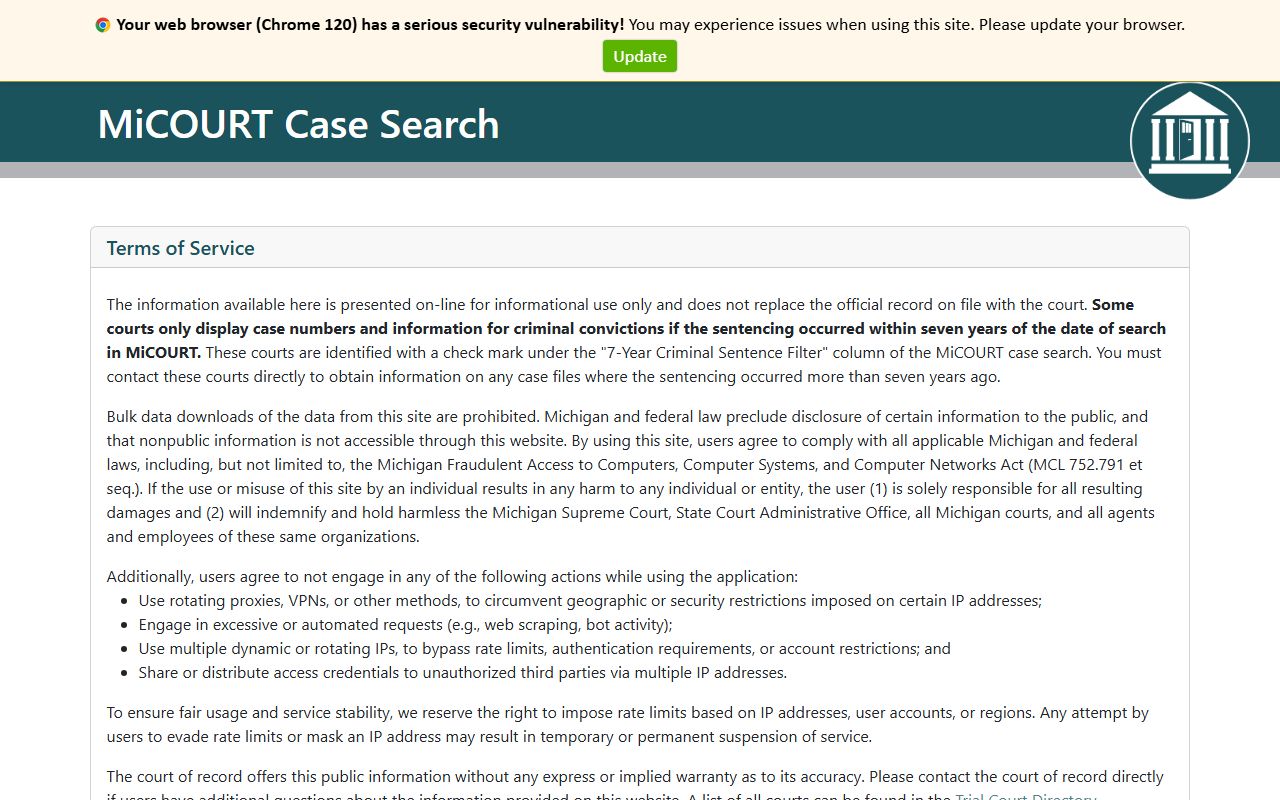
Depending on the court that holds the file, the tool can return civil, criminal, traffic, domestic, and probate matters. For district cases, the county's own 98th District Court case search link is the closest fit.
- Open the Michigan case-search site and choose the court that matches the case type.
- Enter a party name or a case number for the person or matter you need.
- Filter by court type and date range to shrink a long result list.
- Open a matching case to read the docket entries and hearing notes.
- Read a "REVIEW" entry as a status flag, not a scheduled court date.
- Ask the clerk or the court office for older or non-digitized files by phone or by email.
The Gogebic County Judicial System
Michigan runs a three-tier trial court system, and Gogebic County uses all three levels. The 32nd Circuit Court is the general-jurisdiction trial court, and it has been shared with neighboring Ontonagon County since 1891. The 98th District Court handles smaller civil suits, misdemeanors, and traffic matters. The Probate Court handles estates, guardianships, and conservatorships out of the same courthouse.
Case flow: Trial courts (Circuit · District · Probate) › Michigan Court of Appeals › Michigan Supreme Court
The state lays out each level on its Michigan trial courts overview, which explains how circuit, district, and probate courts split the work.
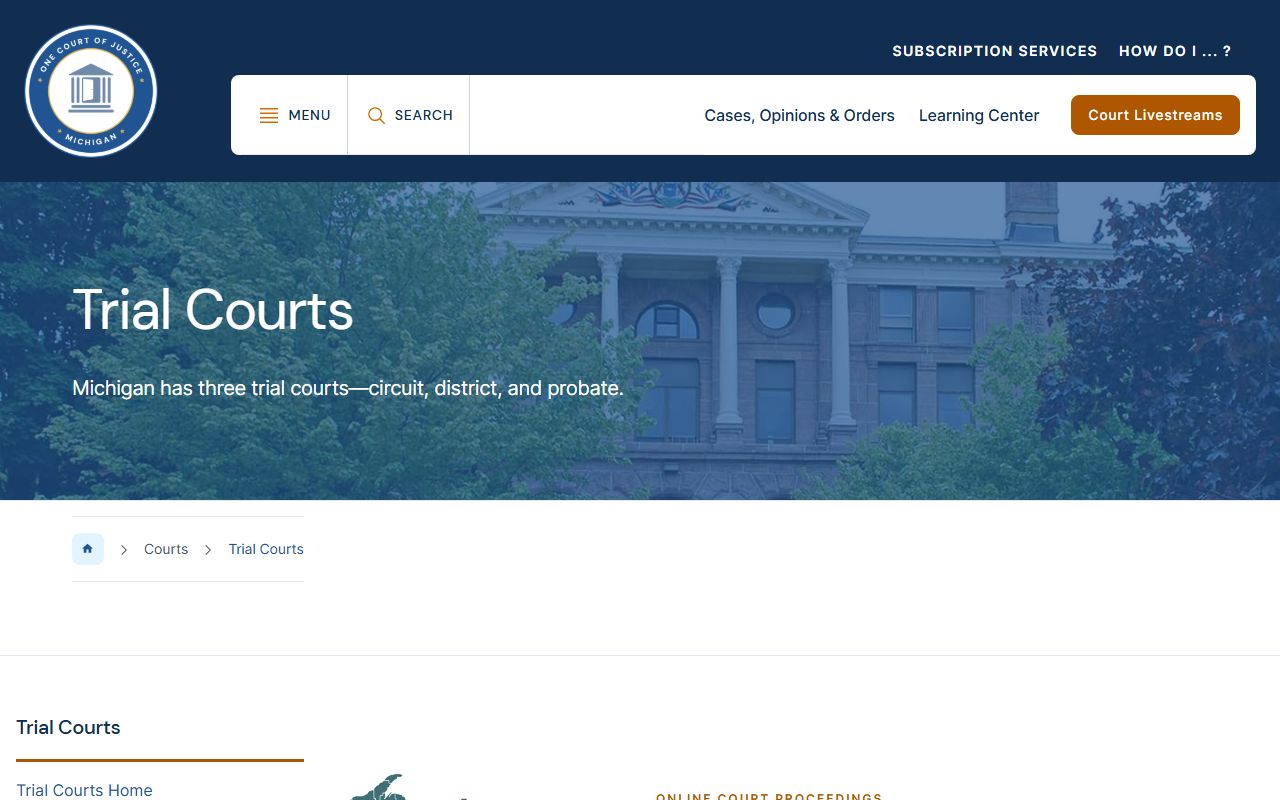
Locally, the Gogebic County Circuit Court hears felonies, civil suits over $25,000, and divorce and custody matters through its Family Division, which also holds juvenile cases. The 98th District Court hears civil suits under $25,000, small claims, landlord-tenant disputes, misdemeanors, and traffic, and it runs probation and a drug court. The table below compares what each court keeps.
| Feature | 32nd Circuit Court | 98th District Court | Probate Court |
|---|---|---|---|
| Main role | General jurisdiction | Limited jurisdiction | Estate and protective |
| Civil money | Over $25,000 | Under $25,000 | Estate value based |
| Criminal | Felonies | Misdemeanors | None |
| Other cases | Divorce, custody, PPOs | Small claims, traffic | Guardianships, conservatorships |
| Appeals to | Court of Appeals | Circuit Court | Court of Appeals |
Where to Start in Gogebic County
The right office depends on the record. The County Clerk and Register of Deeds is the hub for vital records, marriage licenses, circuit court filings, and deed recording. The district and circuit courts keep their own case files. The sheriff handles custody, civil process, and warrant service, and the prosecutor decides when charges are filed. Gogebic County has no standalone public defender office on its website, and court-appointed-attorney requests run through court forms instead.
The county's courts landing page links to every court, to the friend of the court, and to the forms center.
That page mirrors how most users actually move: find the search page, then the forms page, then the office contact, then e-file or file in person. When a case does not appear online, the office that holds it is the next stop rather than a guess at a docket number.
- Vital records and marriage route to the County Clerk and Register of Deeds.
- Felonies, divorce, and PPOs route to the 32nd Circuit Court.
- Traffic and misdemeanors route to the 98th District Court.
- Estates and guardianships route to the Probate Court.
- Custody, warrants, and civil process route to the Sheriff's Office.
Types of Court Records in Gogebic County
Gogebic County court records fall into a handful of broad groups, and the court that produced a case decides where its file lives. Circuit records cover felonies and larger civil suits. District records cover misdemeanors, small claims, and traffic. Probate records cover estates and protective cases. Family and juvenile matters sit inside the Circuit Court's Family Division, with child support work handled by the friend of the court.
The list below sorts the common record types a public user runs into.
- Criminal records - misdemeanors in district court and felonies in circuit court.
- Civil records - small claims and landlord-tenant in district court, larger suits in circuit court.
- Family and divorce records - divorce, custody, and parenting-time files through the Family Division.
- Probate records - estates, guardianships, conservatorships, and small estate assignments.
- Traffic records - civil infractions and related payment cases in the district court traffic division.
What Gogebic County Court Records Show
A Gogebic County court record is built from the fields the court enters as a case moves. Public hearing calendars and case pages show party names, hearing times, case numbers, and a tracking number the court uses alongside the case number. The record grows as motions, orders, and notices get filed, and the docket log lists those steps in order.
The table below maps the common fields to what each one tells a reader.
| Field | What It Shows |
|---|---|
| Party Name | The people or entities named in the case. |
| Case Number | The court's unique file identifier, often with a case-type suffix. |
| CTN | A tracking number shown next to the case number on hearing calendars. |
| Hearing Info | The type of hearing, such as a motion hearing or a review. |
| Time | The scheduled hearing time, or a "REVIEW" flag that is not a live date. |
| Location | The courtroom or court that holds the matter. |
A docket entry is not always the same thing as a filed document, and a calendar can list a matter that is later moved, removed, or marked nonpublic. Reading the docket log alongside the orders gives the clearest picture of where a case stands.
Note: The county says a "REVIEW" value in the next-hearing field is a status marker and does not mean a live courtroom hearing is scheduled at that time.
Public Access Laws for Gogebic County Records
Michigan treats county public records as presumed open unless a statute or court rule says otherwise. Noncourt county records move through the Freedom of Information Act and the office that holds them, while court files follow the Michigan court rules and the court that keeps them. Deeds go through the register of deeds, vital records go through the clerk, and sealed, juvenile, and expunged matters stay restricted.
Key Statutes:
Michigan MCL § 15.231 - sets the state Freedom of Information Act policy that public records are open to the public.
Michigan MCL § 15.243 - lists the categories a public body may withhold from a FOIA request.
Michigan MCR § 8.119 - the court rule that controls how trial courts keep and release their case records.
Michigan MCL § 712A.28 - keeps juvenile case records with the court and open only by court order.
Michigan MCL § 780.621 - the expungement statute for setting aside a conviction.
Restricted and Confidential Records
Not every Gogebic County court file is open. Juvenile case records sit with the court and open only by court order, and adoption matters within the juvenile jurisdiction are handled as restricted. Mental-health treatment petitions, filed on the probate side, carry clinical certificates and other sensitive material that is not an ordinary public docket. Guardianship and conservatorship packets mix public filings with physician reports and central-registry checks.
To view a sealed record, a person generally needs a court order, because sealing follows court rule and statute rather than a simple request. Expungement runs the same way. A reader usually needs the conviction details, the sentencing court, and a completed application, then must wait for the court's order before a record is set aside. Gogebic County does not publish a local expungement fee sheet or a step handout, so the court that entered the conviction is the office to call.
Note: A public docket is not proof that a matter has no records, since some hearings are simply marked nonpublic or omitted from the calendar.
Specialty Courts in Gogebic County
Gogebic County runs its specialty-court work through the 98th District Court and the probation department rather than a separate courthouse. The district court staffs a drug court, listed on its pages as a drug court and work crew, and the probation office names a drug treatment court officer who also handles pretrial release services. That pairing lets one office move a participant from screening into supervision and treatment referrals.
Pretrial release services also appear in the district court navigation, and probation officers make referrals to drug, alcohol, and other programs for people under supervision. The county's official site does not publish a specialty-court rules page, eligibility packet, or calendar, so applicants work through the district court and probation staff for the current process.
Online Filing and Self-Help Access
Gogebic County moved court filing online through MiFILE, Michigan's e-filing platform. The county's MiFILE landing page explains that probate court and 98th District Court civil filings went live on November 17, 2022. Attorneys must e-file, and the county elected to require self-represented litigants to e-file as well.
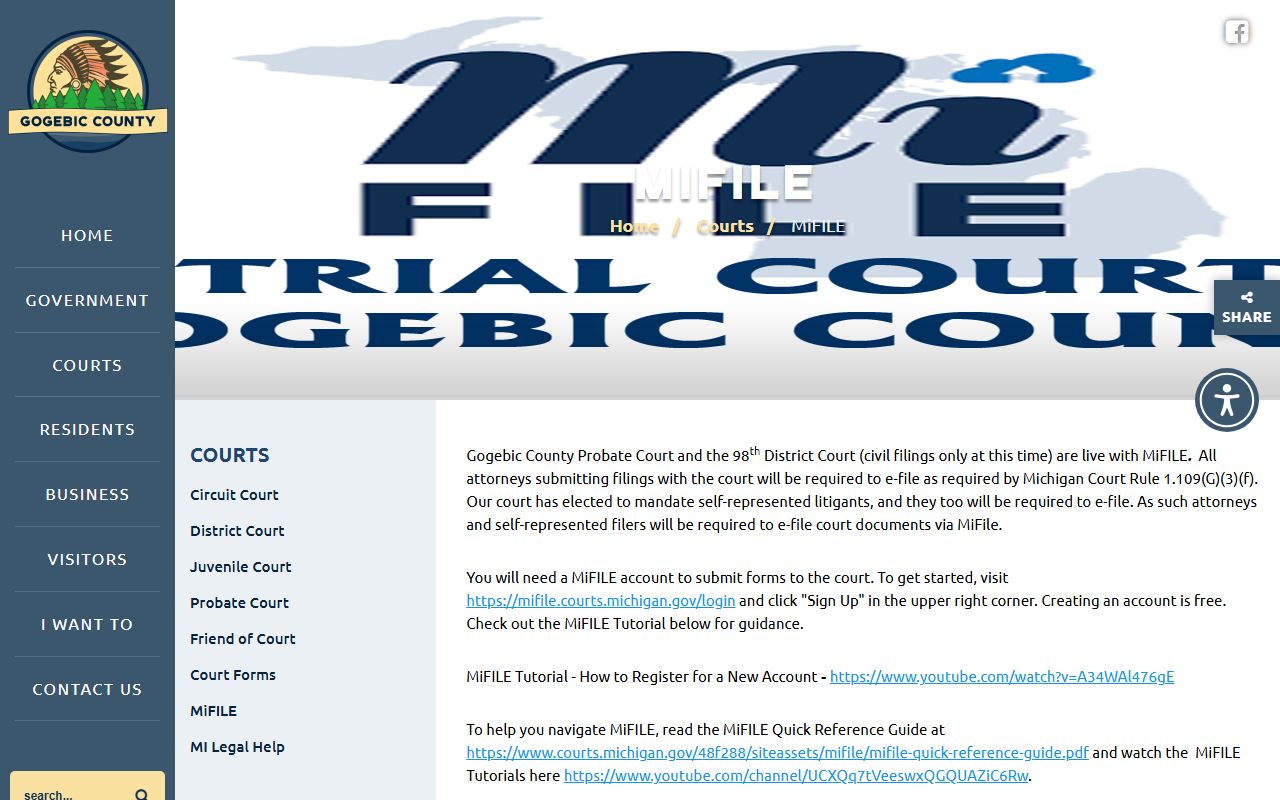
MiFILE handles the filing side, while case search runs through MiCOURT and the district court's own search link. Motion filings and vital-record requests to the clerk go to a county e-file email address instead of a portal.
For people without a lawyer, the county keeps a Michigan Legal Help self-help center inside the courthouse. A county Michigan Legal Help notice describes three kiosks and navigator hours for court users who need forms and guidance.
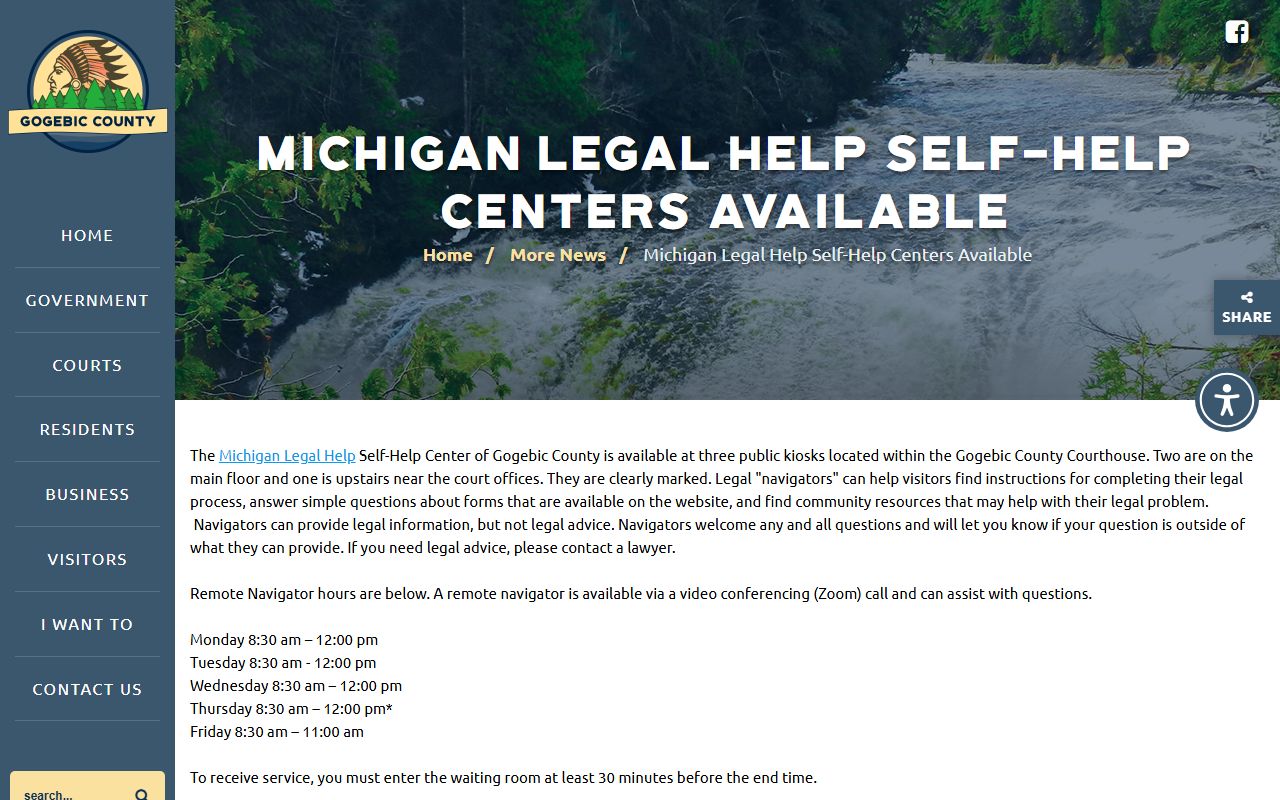
The kiosks matter in a county this rural, where a self-represented user may travel a long way to reach the one courthouse. The navigator hours give walk-in help that a statewide portal alone cannot.
Gogebic County Traffic Tickets and Fines
Traffic cases in Gogebic County run through the 98th District Court Traffic Division. A person who receives a civil infraction ticket must admit or deny within 10 days, and the choices are admit without explanation, admit with an explanation, or deny and set a hearing. The county's traffic ticket process page lays out those deadlines, and the traffic division answers questions by phone.
Online payment goes through the state eTix system linked from the county pages. Paying online admits responsibility and gives up the hearing, and when it applies the abstract goes to the Secretary of State for points. The county fine-payment page warns that out-of-town checks are not accepted, a credit card billing address must match exactly, and there are no refunds. The full ticket workflow lives on the Gogebic County traffic court records page.
The court traffic record and the state driver record are two different files. The court record shows the case, citation, plea, and disposition. The Michigan Secretary of State driving record shows licensing history, points, and sanctions, and a certified copy is the file a court or employer usually wants.
Gogebic County Sheriff and Jail
The Gogebic County Sheriff's Office runs law enforcement, the county jail, court security, civil process, and warrant service from Bessemer. The office also serves as primary law enforcement for Bessemer and Wakefield by contract, and emergency dispatch is handled out of county through Negaunee Regional Dispatch. The jail's stated mission is the safe, humane confinement of people arrested in the county or sentenced by the courts.
Gogebic County does not publish a public online jail roster on its official sheriff or jail pages, so there is no county lookup that returns a current inmate list. The county instead points visitors to service tools: visits run through Securus, commissary deposits go through Access Corrections, mail follows a published inmate mail policy, and a front-vestibule ATM serves visitors. The Michigan Department of Corrections OTIS offender search covers state prison only and explicitly excludes county-jail inmates.
For custody questions, the sheriff's office is the practical contact, and the full service map lives on the Gogebic County inmate records page. Because the county publishes no public warrant list either, warrant questions route office to office, which the Gogebic County warrant records page walks through in detail.
Marriage, Divorce, and Probate Records
Marriage licenses in Gogebic County come from the County Clerk. One or both parties apply in person, residents apply in their county of residence, and nonresidents apply in the county where the ceremony will happen. A three-day waiting period applies, the license issues on the fourth day, and it stays valid for 33 days. Applicants must be 18 or older, or a minor with written consent. Fees are $20 for residents and $30 for nonresidents.
Divorce is handled by the Circuit Court, with the friend of the court managing custody, parenting time, and child support. The county forms center carries the divorce packet, and the friend of the court notes there is no court-appointed attorney for a divorce hearing. Probate handles estates, guardianships, conservatorships, small estates, and mental-health petitions. The definitions below cover terms that show up across these files.
- Testator
- The person who makes a will.
- Executor
- The person named to carry out a will and settle an estate.
- Conservator
- A person the court appoints to manage another person's property or estate.
- Guardian
- A person the court appoints to make care and personal decisions for someone.
- Petitioner
- The party asking the court to act in a probate, family, or protective matter.
Probate filing fees on the county forms page run $175 for a guardianship petition, $175 for a conservatorship petition, and $25 for a small estate assignment, while a mental-health petition carries no filing fee.
Federal Court Coverage for Gogebic County
Some Gogebic County matters are federal, not county, cases. The county falls in the Western District of Michigan, Northern Division, and the district's practical contact point for this region is the federal courthouse in Marquette. The Western District of Michigan keeps separate locations in Grand Rapids, Lansing, Kalamazoo, and Marquette, and its public office hours run during the standard business day.
Appeals from the Western District go to the Sixth Circuit, whose clerk sits in Cincinnati and hears federal appeals from Michigan, Ohio, Kentucky, and Tennessee. Federal filing and dockets live in PACER and CM/ECF, not the county courthouse. That split matters when a user needs to tell apart a county criminal case, a federal civil case, a state-prison custody record, and a county-jail custody record, since none of those files are interchangeable.
Gogebic County Courthouse Location
The county courthouse in Bessemer holds the circuit, district, juvenile, and probate courts along with the County Clerk and Register of Deeds and the friend of the court. The building is the visible county landmark on the homepage banners, and the basement floor even hosted early voting, which shows it serves county-wide public functions beyond court hearings.
Record copies carry set fees at the Register of Deeds counter, summarized below.
| Item | Amount |
|---|---|
| Recording a document (flat) | $30 |
| Each additional instrument | $3 |
| Certified recorded document | $5 |
| Copies per page | $1 |
| Records search (minimum) | $5 |
The county homepage keeps courthouse imagery and current news near the top of the site, so a visitor can check for closures before a long drive.
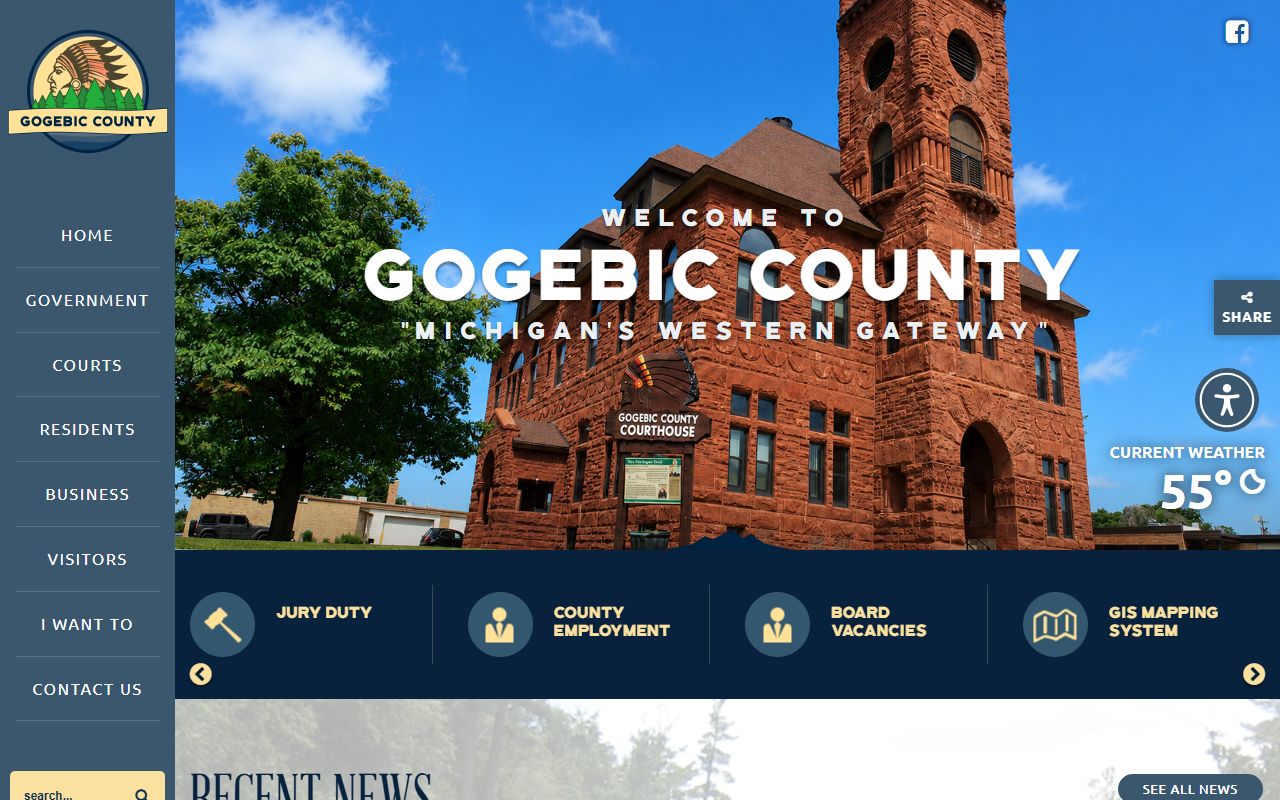
Because the county is large and thinly settled, the courthouse works as a regional stop rather than a Bessemer-only office. The county even still sells a printed road map for travelers coming in from outside town.
The county maps page offers that printed map and points to the GIS system for parcel and address lookups.
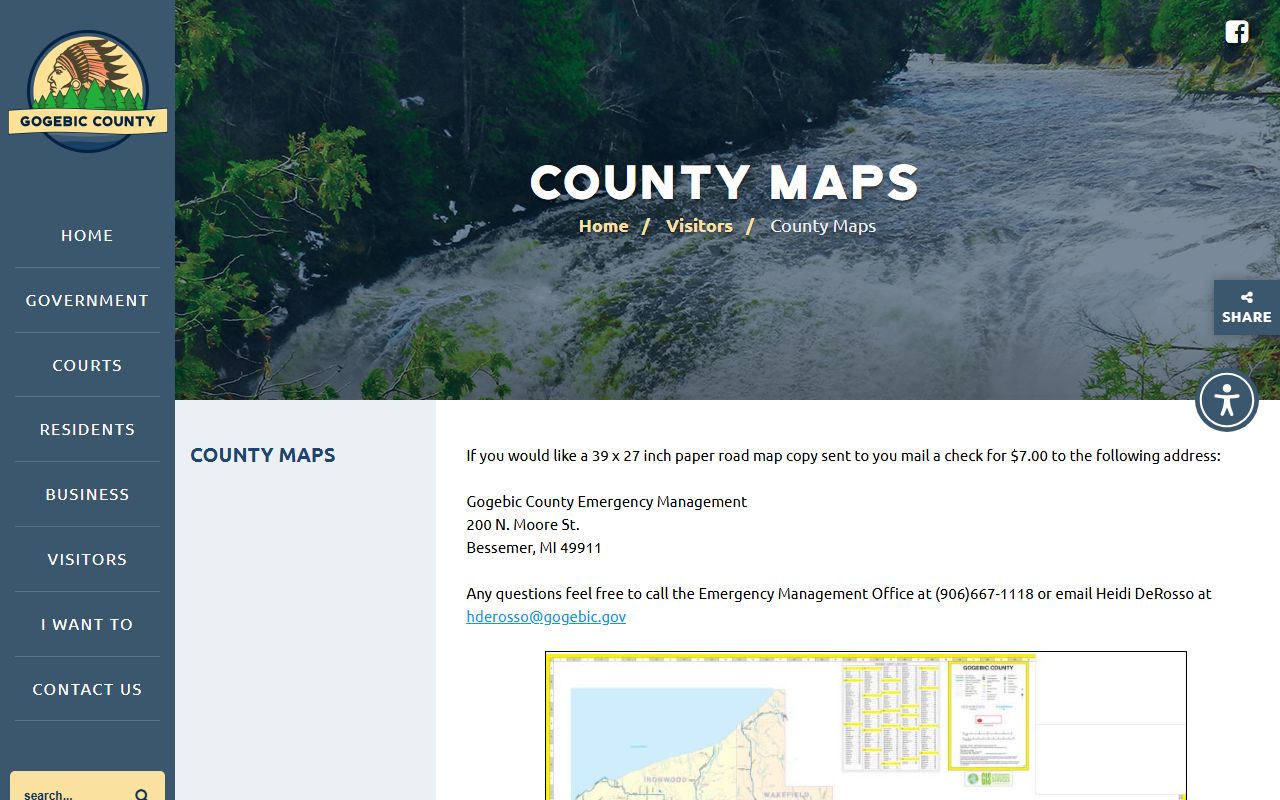
Deed, probate, and civil users often need a parcel reference tied to a courthouse record, so the maps and GIS tools pair naturally with a courthouse visit.
History of the Gogebic County Courthouse
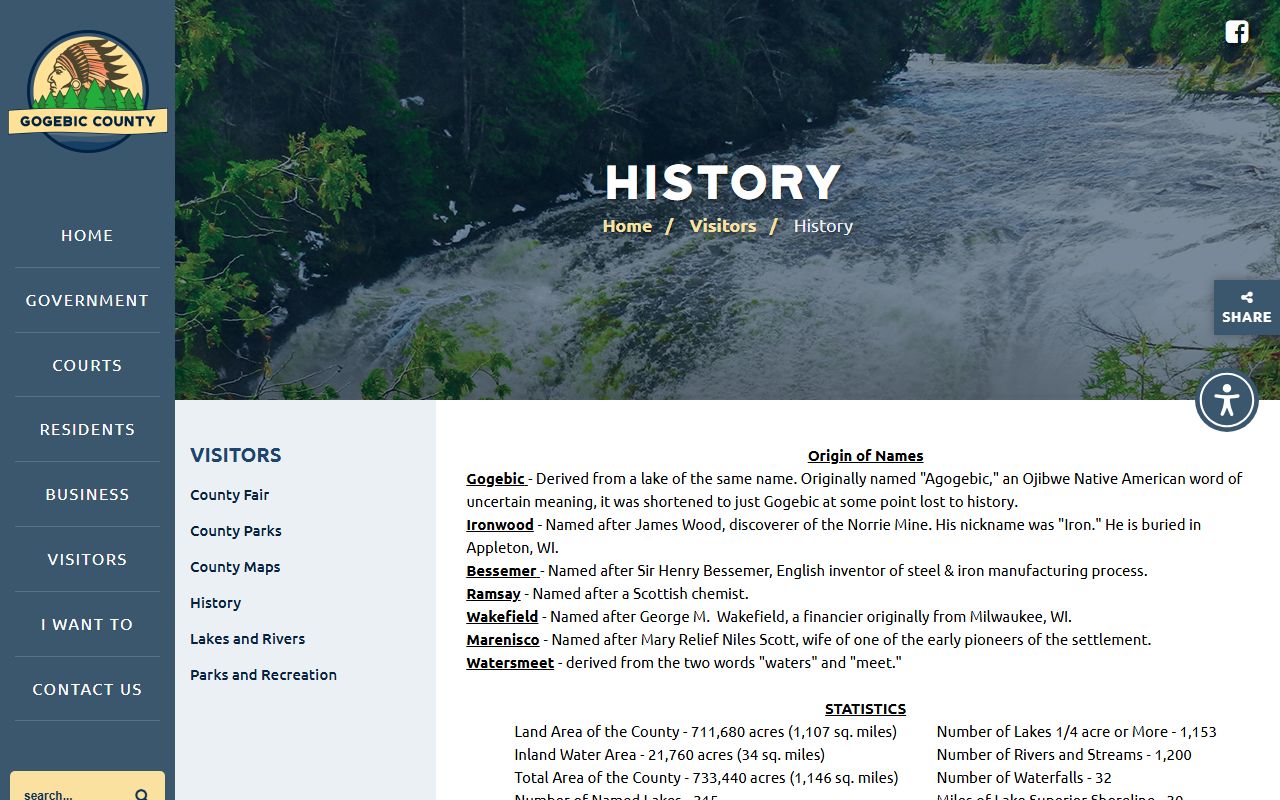
Gogebic County became an official county in 1887, carved out of what had been part of Ontonagon County. Under Michigan's 1850 constitution the whole Upper Peninsula was a single judicial district, and Gogebic and Ontonagon Counties have shared the 32nd Circuit since 1891. The county history page also notes that Gogebic is the most remote of Michigan's 83 counties from Lansing, which shaped its centralized, courthouse-first way of delivering services.
The courthouse carries an unusual piece of Cold War history. It held a Civil Defense fallout-shelter designation, and the old placard is still visible on the exterior for anyone who knows where to look. County history pages frame the building as a historic landmark, not just an office block.
Recent county news shows the courthouse is being preserved rather than replaced. A 2024 courthouse renovation story described maintenance work meant to extend the building's life.
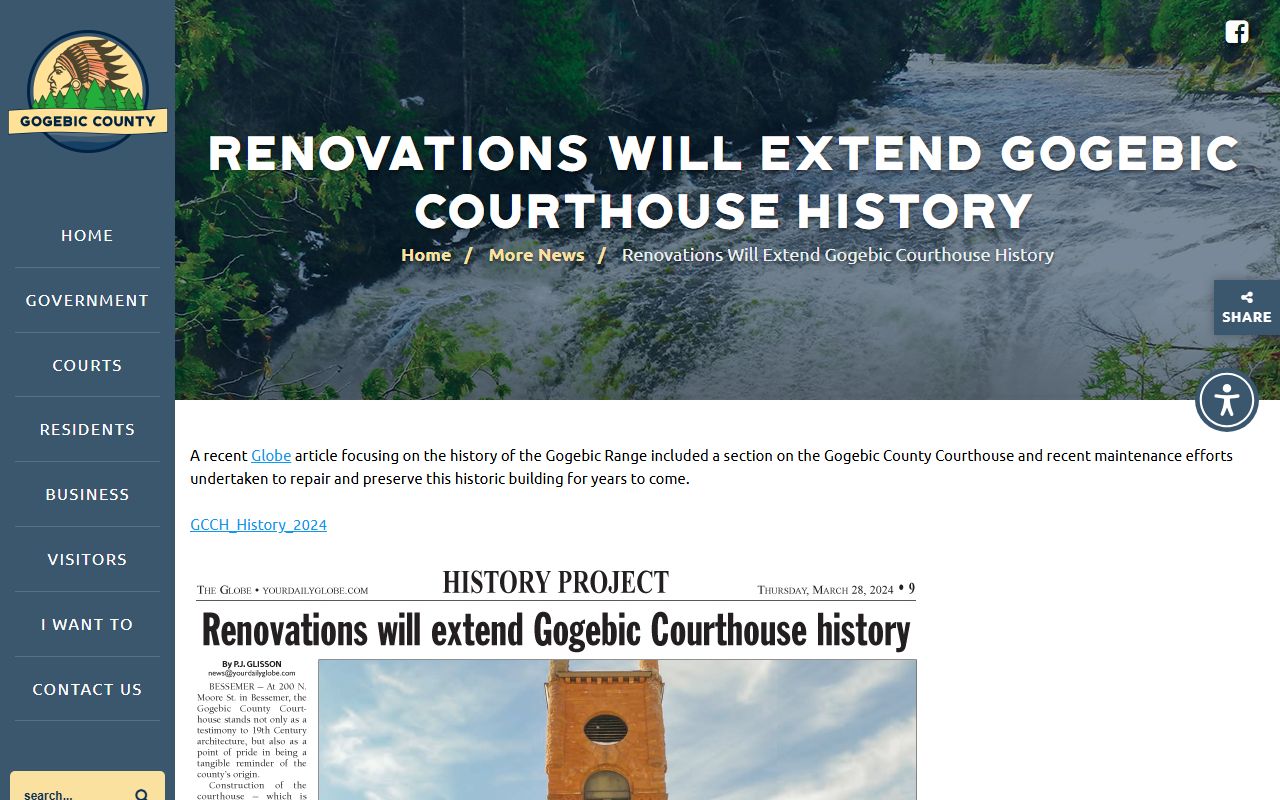
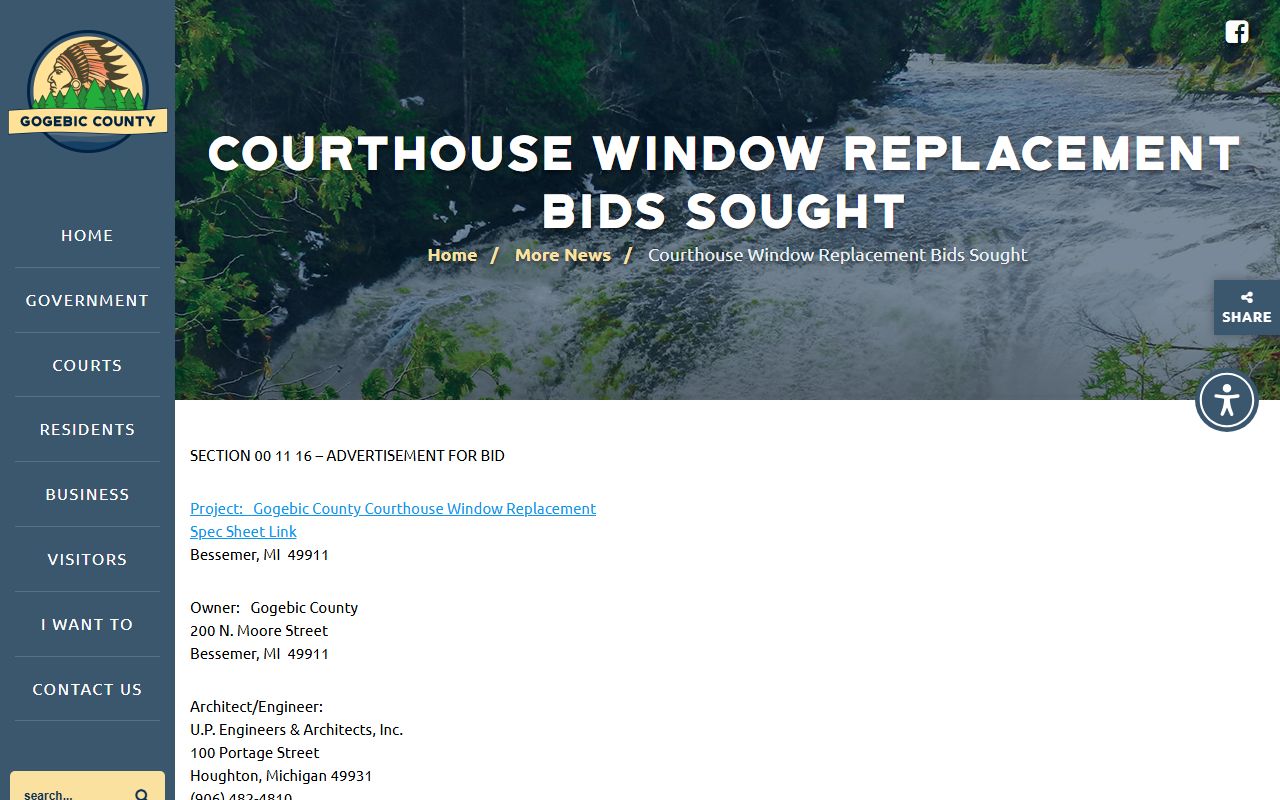
Another 2024 notice sought bids for a full courthouse window replacement, part of the same preservation push.
The county's own history page ties together the county's founding, the circuit-court organization, and the courthouse story in one place.
Note: County history pages caution that some older anecdotes were written decades ago and may not be fully verified, so the safest facts come from the county's own confirmed history lines.
Frequently Asked Questions
Are Gogebic County court records public?
Most trial-court case categories are public in some form under Michigan law, which presumes public records are open unless a statute or court rule restricts them. Court files follow the Michigan court rules, while noncourt county records move through the Freedom of Information Act. Juvenile, adoption, sealed, and expunged matters stay restricted and open only by court order or under the controlling statute.
How do I look up a 98th District Court case?
Start with the statewide Michigan case-search site or the 98th District Court case search link on the county district court page. Enter a party name or case number, then filter by court type and date. The county says the online information is a public service and does not guarantee accuracy, so confirm anything important by calling the district court office.
Does Gogebic County post a jail roster online?
No. The official sheriff and jail pages do not publish a public online jail roster, so there is no county lookup that returns a current inmate list. The county points visitors to Securus for visits, Access Corrections for commissary, and a published mail policy. The state OTIS system covers prison inmates only and excludes county-jail custody.
How do I check for a warrant in Gogebic County?
The county publishes no public warrant list, so warrant questions route office to office. The sheriff's office handles execution and custody questions, the court handles bench-warrant status by case type, and the prosecutor handles charge-related warrant questions. Anyone with an active warrant usually needs to speak with counsel before resolving it in person.
What does a marriage license cost in Gogebic County?
The County Clerk charges $20 for residents and $30 for nonresidents. One or both parties apply in person, residents apply in their county of residence, and nonresidents apply where the ceremony will happen. A three-day waiting period applies, the license issues on the fourth day, and it stays valid for 33 days.
Where do I pay a Gogebic County traffic ticket?
Traffic tickets run through the 98th District Court Traffic Division, and online payment goes through the state eTix system linked from the county pages. Paying online admits responsibility and gives up the hearing. The county does not accept out-of-town checks, requires a matching credit card billing address, and issues no refunds, so contact the court first if you want a hearing.
Which court handles estates and guardianships?
The Probate Court handles estates, guardianships, conservatorships, small estates, and mental-health treatment petitions from the county courthouse. Filing fees run $175 for a guardianship or conservatorship petition and $25 for a small estate assignment, while a mental-health petition has no filing fee. Probate filings also run through MiFILE, which went live for probate in November 2022.