
What the Probate Court Handles in Gogebic County
The Gogebic County Probate Court is one of the three Michigan trial courts that serve the county, alongside the Circuit Court and the 98th District Court. Probate is the branch that deals with what happens to a person's property and legal decisions when they die or can no longer act for themselves. Judge Hon. Anna R. Talaska presides, and Elizabeth Regnier serves as probate register on the county's court page.
The court's jurisdiction covers a defined set of case types. It opens and supervises decedent estates, both testate and intestate. It appoints guardians for minors and for adults who cannot make safe decisions. It appoints conservators to manage money and property for protected people. It processes small estates through a simplified assignment. It also hears mental-health treatment petitions, which ask the court to order care for a person in crisis.
You can review the office's own listing of forms, contacts, and estate-planning helpers on the Gogebic County Probate Court page, which is the county's official landing spot for this court.
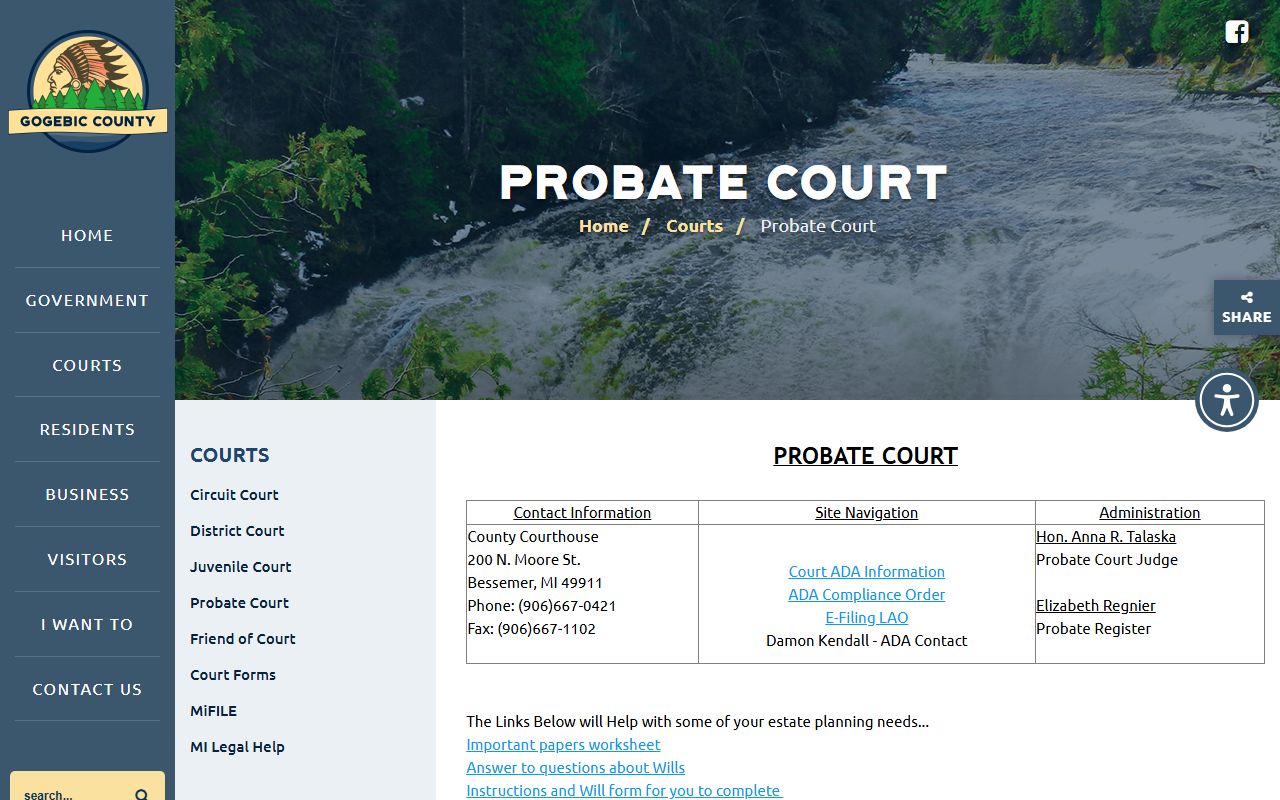
That page routes families to the petitions, worksheets, and instructions the court expects with each filing. It is the quickest way to confirm which court division holds a Gogebic County probate matter before you call or visit.
Probate Terms Defined
Probate filings use a short list of words that decide who does what. A quick read of the core terms makes the forms and hearing notices far easier to follow. These definitions apply the same way in Gogebic County as they do across Michigan.
- Testator
- The person who made the will. A testator sets out who receives their property and who should manage it.
- Executor
- The person named in a will to carry out its terms. Michigan courts more often call this role the personal representative.
- Intestate
- Dying without a valid will. State law then decides who inherits and in what share.
- Estate
- All the property, money, and debts a person leaves behind. The estate is what the court helps settle and pass on.
- Heir
- A person entitled to inherit under state law when there is no will, such as a spouse, child, or other close relative.
- Guardianship
- A court order giving one person legal authority to make personal and care decisions for a minor or an incapacitated adult.
- Conservatorship
- A court order placing a protected person's finances and property under a conservator, who must account to the court.
How to Search Gogebic County Probate Records
Gogebic County does not run a separate public probate-search portal of its own. Probate case data instead flows through the statewide Michigan court system and the county's electronic filing tool. That means the search path starts at the state level and then falls back to the courthouse for anything older or paper-only.
The county's district and probate courts joined MiFILE, the state electronic filing platform, on November 17, 2022. Attorneys must e-file, and the county chose to require self-represented filers to e-file as well. New probate documents are submitted and stored through that system rather than a local docket page.
- Open the statewide Michigan case search and choose the court type; probate cases may appear depending on the court and record.
- Search by a party name or case number, then open the matching case to view its register of actions and hearing notices.
- To start a filing or submit documents, use Gogebic County MiFILE, which the probate court has used since 2022.
- For older or non-digitized files, contact the probate office directly and ask staff to pull the paper record at the counter.
Michigan Legal Help kiosks are set up inside the courthouse for people who need to prepare probate paperwork without a lawyer. Court staff cannot give legal advice, but they can point you to the correct form and the right filing channel.
Note: A "REVIEW" flag in a case-search hearing field does not mean a live hearing is set for that date, so confirm any date with the court before you appear.
Gogebic County Probate Court Contact
Probate matters are filed and heard at the county courthouse in Bessemer, the same building that houses the Circuit Court and the 98th District Court. The office shares a fax line with the county prosecutor. Call ahead if you need to confirm counter hours before driving in from across the county.
Gogebic County Probate Court
200 N. Moore St.
Bessemer, MI 49911
(906) 667-0421
Fax: (906) 667-1102
Mon-Fri 8:30 a.m. to 4:30 p.m. CST
Judge Hon. Anna R. Talaska hears the docket, and probate register Elizabeth Regnier handles the case files and public requests. For a certified copy or a records question, the register's counter is the correct first stop rather than the district or circuit clerks.
Gogebic County Probate Filing Fees
Probate filing fees are set by statute and listed on the court's forms page. The county posts a Probate Court Fee Tables document dated February 2025 that filers should check for the current figures. The most common petitions carry the amounts below, and a fee waiver request is available for filers who cannot pay.
| Item | Amount |
|---|---|
| Guardianship petition | $175 |
| Conservatorship petition | $175 |
| Small estate assignment | $25 |
| Mental-health treatment petition | No filing fee |
A small estate assignment is the low-cost path for modest estates that fall under the state dollar limit. It lets property pass without a full estate administration, which is why the fee is a fraction of the guardianship and conservatorship petitions. The court's instruction sheet for small estate filing walks through what qualifies.
Supporting Documents for Gogebic County Probate Cases
A probate petition is rarely a single page. Guardianship, conservatorship, and mental-health cases in particular carry a stack of supporting forms that the court needs before it can act. The forms page shows how heavy that document burden can be, and missing pieces are a common reason filings stall.
- Protected personal identifying information forms that keep sensitive numbers off the public file
- Physician reports and clinical certificates for guardianship, conservatorship, and mental-health petitions
- Contact information forms for interested parties
- Central registry check request forms
- Acceptance of appointment signed by the proposed fiduciary
- Proof of service on interested parties
- Inventory forms and annual account or annual report forms
The pattern is consistent: the court wants proof that the right people were notified, that the proposed guardian or conservator is qualified, and that the estate is being tracked over time. An appointed fiduciary keeps filing inventories and annual accounts for as long as the case stays open.
What Gogebic County Probate Records Show
A probate file grows as a case moves through the court. The public portions typically show the case caption, the petitions filed, hearing notices, and the orders the judge signs. Together they trace who opened the matter, who was appointed, and how the estate was closed.
Depending on the case type, a Gogebic County probate record can include the following.
| Field | What It Shows |
|---|---|
| Case caption | The decedent, ward, or protected person and the case number |
| Will | The admitted will, when the person died testate |
| Petitions | Requests to open the estate, appoint a fiduciary, or authorize an act |
| Letters | The court's authority granting a personal representative, guardian, or conservator power to act |
| Inventory | The property and value the estate holds |
| Annual accounts | Ongoing reports on money in and money out |
| Orders | The judge's rulings, including the order closing the estate |
Marriage certificates and divorce judgments are separate records held elsewhere; those live with the county clerk and are covered on the Gogebic County marriage and divorce records page rather than in a probate file.
Restricted Gogebic County Probate Records
Not every part of a probate file is open. Probate cases often mix a public shell with sensitive contents. The case caption, hearing notices, and final orders can be public, while medical, central-registry, and certain family details are treated as confidential and are kept off the open record.
Mental-health treatment petitions and their clinical certificates sit at the private end of that scale. Guardianship and conservatorship packets ask for physician reports and central registry checks, which signals how much protected material a single case can carry. A public docket that lists a hearing is not proof that the underlying documents are open, since some hearings can be marked nonpublic.
Probate sits close to the juvenile side of the county's family work, and the same building routes those cases too. You can see how the county frames that division on the Gogebic County juvenile court page, which describes the family-division matters kept apart from open probate dockets.
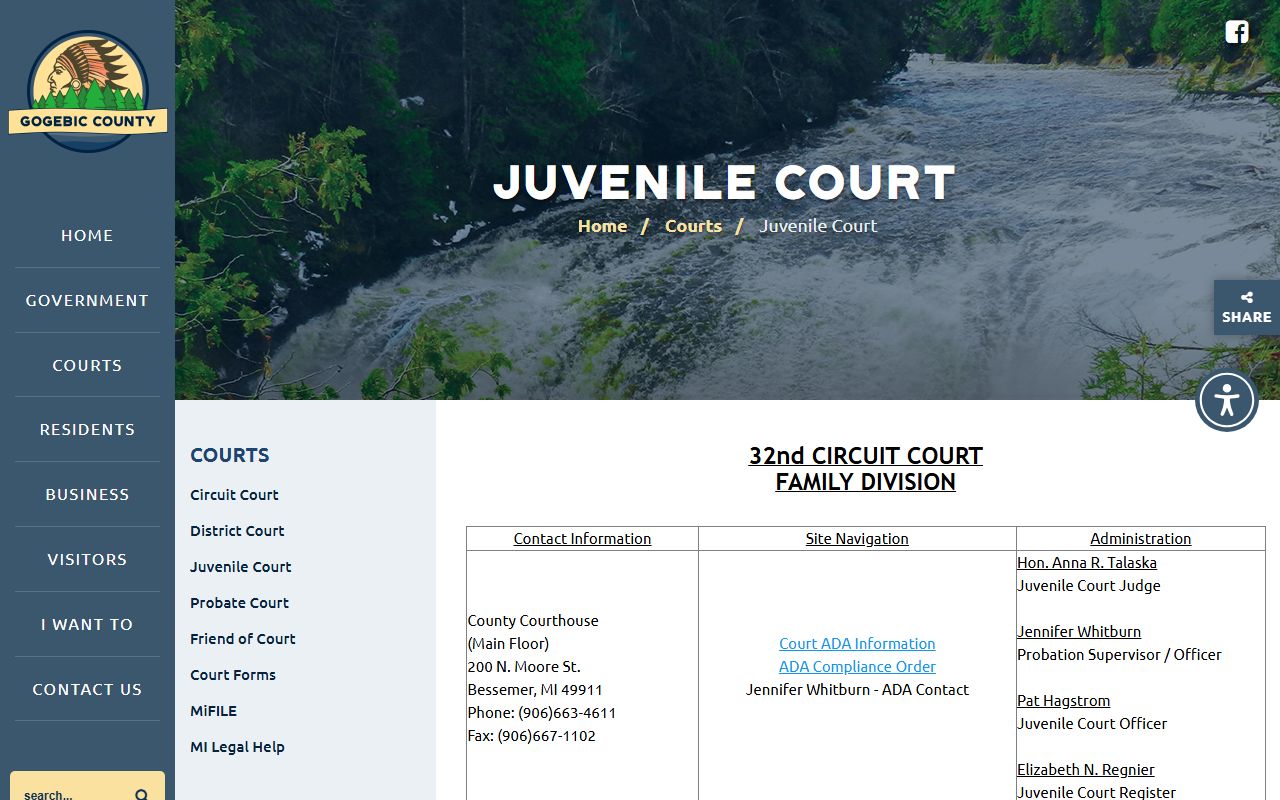
Juvenile confidentiality runs deep in Michigan. Under state law, juvenile case records stay closed and open only by court order, a rule that shapes how the family and probate divisions guard minor guardianship and abuse or neglect files.
You can read the controlling confidentiality rule at MCL 712A.28, which keeps juvenile case records under the court's control.
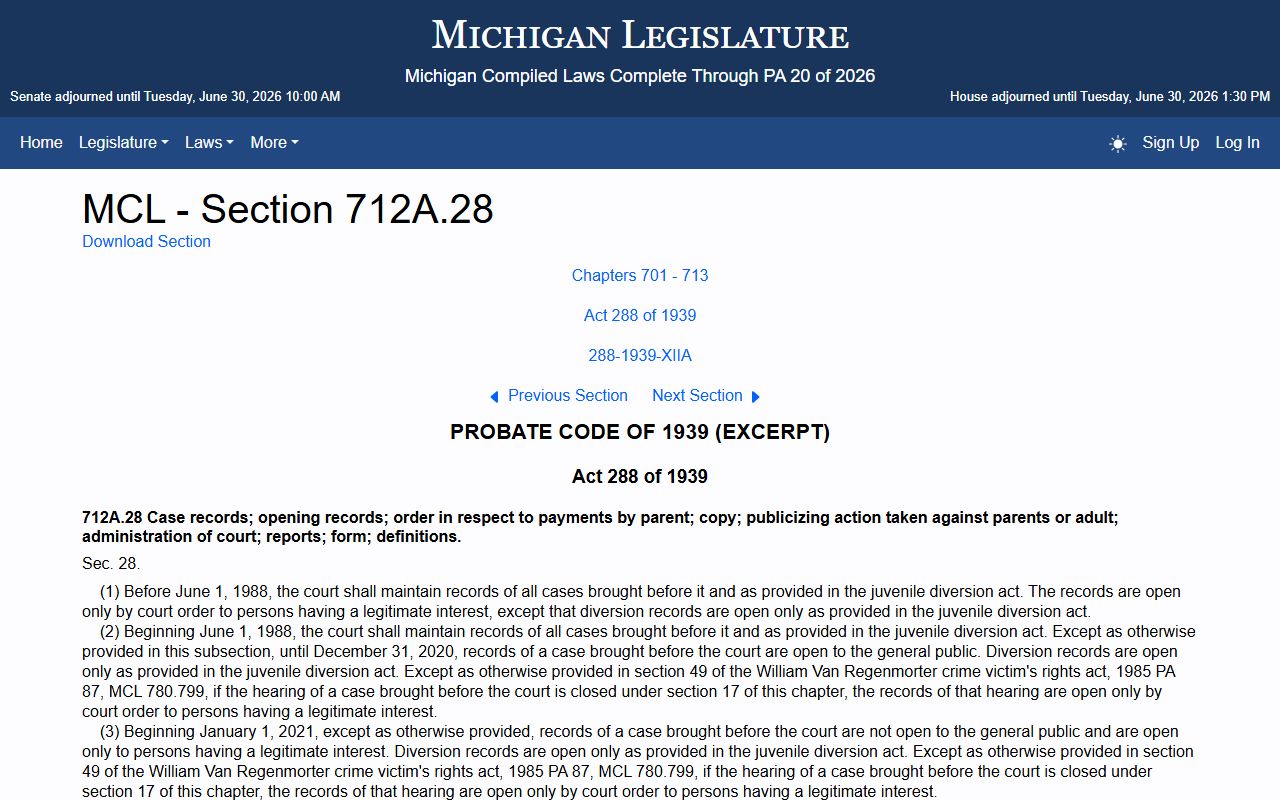
That statute is the reason a family or minor guardianship file cannot be pulled from a public counter the way an ordinary decedent estate can. For copies of restricted material, an interested party usually needs to show standing or ask the judge for an order.
Note: A sealed or nonpublic probate matter still generates records, so the absence of an online listing does not mean no file exists, only that access is limited.
Estate-Planning Help From the Probate Court
Beyond active cases, the Gogebic County Probate Court page links a set of estate-planning helpers aimed at families who want to prepare before a crisis. These reference materials are not court filings; they are worksheets and guides meant to make later probate steps simpler.
- An important papers worksheet for gathering key documents in one place
- A questions-and-answers sheet about wills
- Instructions and a will form
- Medical questions and suggestions to think through in advance
Michigan probate is a county trial-court function and has nothing to do with the federal courts. If a matter is truly federal, Gogebic County sits in the Western District of Michigan, Northern Division, not the probate court in Bessemer.
You can confirm the county's federal grouping on the Western District of Michigan county map, which lists every county the district covers.
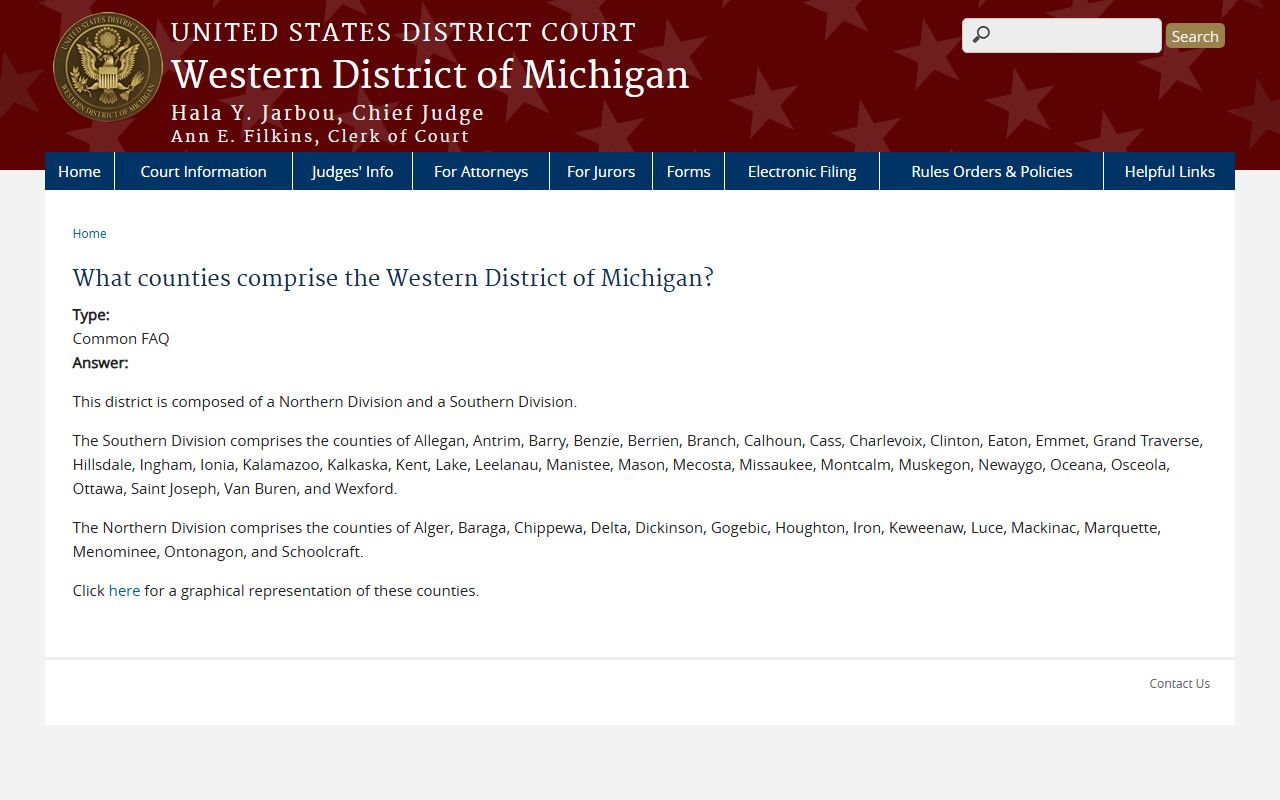
For everyday estates, guardianships, and small-estate assignments, though, the local Probate Court and the county register handle the file. Certified copies and general court records requests can also start with the Gogebic County Clerk and Register of Deeds or the county's court records channels.